Loneliness and social isolation
I'm Thinking of Ending ThingsLoneliness and social isolation are both a refuge the narrator values and a vulnerability the story gradually makes impossible to ignore. At first, being alone promises relief from social demands; at the dark country school, the same condition becomes frightening. Jake’s concealed history and the narrator’s final reflections sharpen that reversal: solitude may be chosen, but it cannot reliably replace the connection on which endurance depends.
Solitude as a Chosen Refuge
The narrator imagines the night custodian’s work as an appealing form of solitude. The custodian can clean an isolated country school at his own pace, without students or colleagues interrupting him, and can follow a routine developed over years. The narrator distinguishes this appealing independence from the cleaning itself: what seems enviable is being able to work without small talk, questions, or discussion of future plans. Living alone as well as working alone, the narrator thinks, would make life easier and more natural.
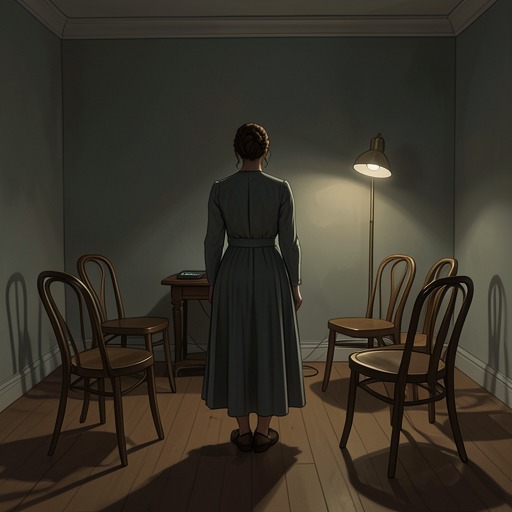
That preference is not presented as uncomplicated happiness. The narrator describes spending much time alone and cherishing solitude, while also conceding that Jake may be right to think there is too much of it. Even so, the narrator initially treats loneliness as manageable: a solitary life might be lonely, but it can still be contented. The tension between those claims matters. Solitude is neither simply a symptom to be cured nor an entirely sufficient way to live; its meaning depends on circumstance.
When Circumstance Changes
The change becomes concrete in the car outside the school. Snow obscures the road, the vehicle is frigid, and Jake has turned off the engine and taken the keys with him. As loud bangs come from inside the building, the narrator wants to leave and wonders where Jake has gone. The isolation that seemed comfortable in the abstract now has an immediate physical setting: a freezing car, a dark school, and no clear way to find the person who accompanied the narrator there.
The narrator connects this fear to the relationship with Jake, recalling the earlier thought that it should have ended long ago and that the visit to his parents’ home had been a mistake. Yet the narrator also admits to curiosity about the house and its past. At the school, the narrator again asserts a willingness to remain single and alone, even while acknowledging loneliness. The repetition does not resolve the contradiction; instead, the growing unease tests whether contentment in solitude can hold when the narrator is frightened and wants Jake’s presence.
After leaving the car, the narrator calls for Jake and crosses the exposed grounds. The surroundings offer little sense of human company: bent basketball rims without mesh, rusty soccer goalposts without nets, and a worsening wind behind the building. A door beyond the Dumpsters suggests Jake may be inside. The narrator’s route toward it turns the idea of chosen aloneness into action: despite earlier insisting that loneliness is tolerable, the narrator walks toward the place where Jake has disappeared.
Isolation as a Limit on Endurance
Near the end, the narrator reflects on human fragility through the body’s unavoidable needs and rhythms. A beating heart, usually unnoticed, becomes an irritating reminder of dependence on a body that cannot simply be switched off. The reflection widens from bodily limits to the difficulty of being only alone. There is much to depend on, and much to fear; isolation cannot erase human needs merely by making them less visible.
The narrator then makes connection the condition of endurance. People may praise the ability to keep going through anything, but endurance is possible only with others, whose closeness forms its underlying support. Without anyone else, ordinary measures of time—a day, a week, a year, a lifetime—take on a different meaning. The narrator considers continuing or not continuing as the unavoidable choice that remains when love and empathy are imaginable but no person is present with whom to share them. The shift from the narrator’s earlier preference for privacy to this stark account of isolation gives solitude real stakes without reducing the question of survival to a single explanation.
Jake’s History and the Meaning of Connection
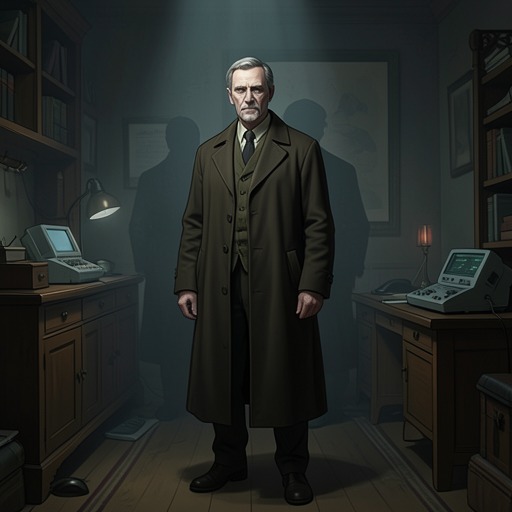
The school revelation recasts the narrator’s understanding of Jake. The narrator concludes that Jake had staged the pursuit of the custodian to bring the narrator into the building, where escape would be impossible. Jake’s shoes, left in the locker room, and the rubber boots worn by the supposed custodian support the recognition that Jake was the figure whose presence had drawn the narrator through the school. The sequence turns a search for another person into the discovery that the feared pursuer and the missing companion are the same person.
The narrator also reconsiders Jake’s account of his family. The story that his brother was troubled is judged to have been invented; the narrator concludes that Jake, not a brother, was the one in crisis, and that no brother existed. The narrator further recognizes that Jake’s parents had died long ago. This revision changes the apparent social background of Jake’s distress: the family story that had seemed to explain his position no longer provides evidence of a living brother or parents who could support him. The narrator concludes that Jake is beyond help and that help never came, while also recognizing that Jake somehow knew the narrator was thinking of ending the relationship. The narrator believes that Jake could not face being alone.
Connection and the Unresolved Choice
As the boots approach, the narrator’s reflections return to the question of what can be done when no one else is there. The earlier moral distinction between being good and being bad is set aside as the wrong question; the remaining choice is whether to continue. The narrator presents interaction and connection as necessities, not optional comforts, and argues that a person cannot become the best kisser alone. Even the possibility of being truly known depends on another person: a relationship may become real when someone previously unconnected recognizes a person in a way that person had not thought possible.
The ending keeps the consequences of isolation immediate rather than abstract. The narrator and Jake’s shared perspective settles into silence inside a small closet, while the approaching footsteps suggest that the danger has not passed. Within this scene, the novel does not offer solitude as a durable answer to suffering. It shows the narrator moving from an assertion of independence toward an account of connection as life’s infrastructure, while leaving the final outcome of the immediate encounter unresolved.